
 Sucuri
Browsing Category
Website Security
1054 posts
500 Internal Server Error: What It Means and How to Fix It
You load your own site, and instead of your homepage you get a blank page with a line of text reading 500 Internal Server Error.…

What Is Encryption? How It Protects Your Website and Its Data
If you run a website, you’ve already met encryption even if you’ve never used the word. It’s the 🔒 padlock in the browser bar, the reason…

Vulnerability & Patch Roundup — September 2026
 Sucuri Malware Research Team
 If you operate a website, you’re already aware that a single unpatched vulnerability can render your site inaccessible, compromise your reputation, or necessitate extensive remediation…

WordPress Security Plugins: How to Choose the Right One
In short, WordPress security plugins are tools you add to your site to strengthen your settings, scan for malware, watch for file changes, and block…

Vulnerability & Patch Roundup — August 2026
If you operate a website, you’re already aware that a single unpatched vulnerability can render your site inaccessible, compromise your reputation, or necessitate extensive remediation…

Third-Party Script Security: How Tags, Pixels, and Embeds Can Put Websites at Risk
Third-party scripts are common on websites. They help with analytics, ads, live chat, social media, video, payments, and many other features. While not all are…
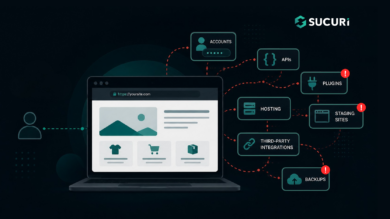
What Is a Website Attack Surface? A Beginner’s Guide to Reducing Risk
Each feature that you add to a website results in a new element that has to be managed. The credentials are accepted by a login…

The Illusion of a Lock – How AI is changing the speed and scale of hands-on WordPress vulnerability research.
 Luke Herbrandson
 2026: the year the tools learned to hack In May 2026, OpenAI began testing an internal research model against a cybersecurity benchmark called ExploitGym. While…

Vulnerability & Patch Roundup — July 2026
Running a website means a single unpatched vulnerability can take it offline, harm your reputation, or require cleanup. Most compromises begin with automated attacks exploiting…

Vulnerability & Patch Roundup — June 2026
Running a website means a single unpatched vulnerability can take it offline, harm your reputation, or require cleanup. Most compromises begin with automated attacks exploiting…

PCI Compliance Isn’t a Checkbox: How to Secure Ecommerce Checkouts Before Attackers Arrive
 Kyle Knight
 A working checkout page is often the moment a business starts to feel real. The products are live, the cart is functional, payments are flowing,…