There appears to be a general misunderstanding among internet users about the difference between malware and viruses. The two terms are often used interchangeably —…
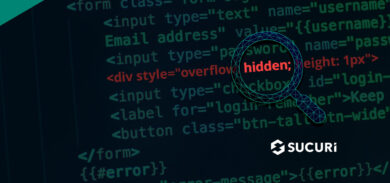
Malware authors, with some notable exceptions, tend to design their malicious code to hide from sight. The techniques they use help their malware stay on…
While working on or maintaining your WordPress website, you’ll inevitably encounter an error that prevents it from properly functioning. Knowing how to securely debug and…
At Sucuri, we’re often asked how website owners and webmasters can secure their websites. However, advice can often be too broad; different content management systems…
When attackers shift up their campaigns, change their payload or exfiltration domains, and put some extra effort into hiding their malware it’s usually a telltale…
All software has bugs — but some bugs can lead to serious security vulnerabilities that can impact your website and traffic. Zero-day vulnerabilities can be…
Magento store owners using the popular FishPig extensions should be wary of a recent supply chain attack which compromised their software repository. FishPig released a…
Originally published: September 8, 2022 by Antony Garand There are a plethora of techniques that attackers use to redirect site visitors and harvest sensitive information…
When a website is hacked symptoms can sometimes include unexpected, unfamiliar and strangely located favicon or .ico files. Other symptoms might include: ”This site may…

 Stephen Johnston
 Ben Martin

 Kaushal Bhavsar

 Rianna MacLeod

 Victor Santoyo


 John Booker

 Denis Sinegubko

 Sucuri